Friday, April 28, 2006
Another Glitch In Global Warming Discovered
BBC announces climate model mistake highlighting uncertainty surrounding climate science; human affect on global warming far from a sure thing.


Thursday, April 27, 2006
Survival Of The Species: Coral Reefs
Courtesy of Grist.com (entertaining environmental newsletter)
Last year, unusually warm Caribbean waters killed some 40 percent of the coral around the U.S. Virgin Islands and weakened much of the rest. This year, wouldn't you know it, the waters are warming again. "It's impossible to overstate how important this is," says biologist Caroline Rogers. High water temperatures lead coral to kick off the partner algae that give them color and sustenance, leaving them white and frail -- a problem that's hitting reefs around the globe. But one species of coral found in the waters of Hawaii seems to have gotten Darwin's memo about adapting: when bleached, instead of relying on energy reserves, Montipora capitata extends short stinging tentacles and gobbles tiny marine animals called zooplankton. "This suggests there are some corals out there that can survive," said lead researcher Andréa Grottoli, whose study appears in Nature this week. Those other corals were weenies anyway, right?
Last year, unusually warm Caribbean waters killed some 40 percent of the coral around the U.S. Virgin Islands and weakened much of the rest. This year, wouldn't you know it, the waters are warming again. "It's impossible to overstate how important this is," says biologist Caroline Rogers. High water temperatures lead coral to kick off the partner algae that give them color and sustenance, leaving them white and frail -- a problem that's hitting reefs around the globe. But one species of coral found in the waters of Hawaii seems to have gotten Darwin's memo about adapting: when bleached, instead of relying on energy reserves, Montipora capitata extends short stinging tentacles and gobbles tiny marine animals called zooplankton. "This suggests there are some corals out there that can survive," said lead researcher Andréa Grottoli, whose study appears in Nature this week. Those other corals were weenies anyway, right?
Florida City To Weed Out UnLicensed Landscape Contractors
Marco Island, Florida is going to implement regulations that will have all landscape contractors registering with the city just like other professional contractors who have to pull a permit if they want to work on Marco Island.
“We’ll have a way of identifying all of the contractors,” said Bob Devlin, Marco Island zoning technician.
“That also helps us combat unlicensed contractors if they are here working,” Eric Wardle, city’s chief of code compliance, added.
Some contractors suggested that the city give them stickers to put on the windshields of their work vehicles that would identify them as registered contractors for the city.
Green Roofs Growing In North America
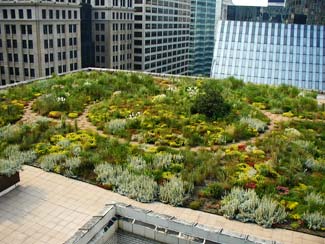
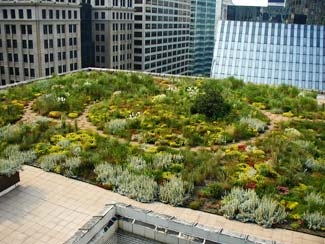
Green Roofs for Healthy Cities released their reports for 2004 and 2005 that indicate a 80% growth in green roof square footage in the United States. Green roofs also known as eco-roofs, vegetated roofs covered 1.3 million sq. ft. in 2004 and grew to 2.5 million sq. ft. in 2005. Cities with the most green roofs include Chicago, Washington, D.C., New York, Austin, Texas and Des Moines, Iowa.
Green Roofs For Healthy Cities' mission is to increase the awareness of the economic, social, and environmental benefits of green roof infrastructure across North America and rapidly advance the development of the market for green roof products and services.
State Rain Sensor Ordinances Growing
Landscape Online is reporting that Connecticut, Delaware, Georgia, and Massachusetts, are preparing to enact moisture sensor regulations on automatic irrigation systems. Pressure from diminishing water supplies, infrastructure increases, and growing population are cited as reasons for more water conservation legislation and enforcement.
Gardening Trends Up and Down
More Americans gardened and maintained their yard last year, according to National Gardening Association's survey 2005. The survey found that 83%, or 91 million U.S. households, participated in 1 or more types of do-it-yourself indoor or outdoor lawn and garden activities in 2005. According to American Nursery & Landscape Association, Americans spent $31.3 billion on professional landscape services in 2003 -- growing 13% in the last six years.
Meanwhile, according to Bruce Butterfield, Nat'l. Gardening Assoc.'s research director. Sales in trees and shrubs," declined from 2004 to 2005. Households purchasing flowering trees and shrubs fell from 12.3 million in 2004 to 9.1 million in 2005. Evergreen or leafy shrubs were sold to 6.4 million households in 2005, down from 9.8 million in 2004.
Is this an indication of smaller landscapes, frustrated homeowners, or natural disasters affecting the homeowner's desire to landscape forced to turn their focus to clean up and rebuilding?
March '06 home sales were up with building material and garden equipment and supplies dealers making the biggest strides last month with a 17.4% unadjusted year-over-year increase.
Meanwhile, according to Bruce Butterfield, Nat'l. Gardening Assoc.'s research director. Sales in trees and shrubs," declined from 2004 to 2005. Households purchasing flowering trees and shrubs fell from 12.3 million in 2004 to 9.1 million in 2005. Evergreen or leafy shrubs were sold to 6.4 million households in 2005, down from 9.8 million in 2004.
Is this an indication of smaller landscapes, frustrated homeowners, or natural disasters affecting the homeowner's desire to landscape forced to turn their focus to clean up and rebuilding?
March '06 home sales were up with building material and garden equipment and supplies dealers making the biggest strides last month with a 17.4% unadjusted year-over-year increase.
Wednesday, April 26, 2006
How far can you drive on a bushel of corn?

Interesting article in Popular Mechanics on crunching the numbers on alternative fuels. Check out the Fuel of the Future Alt-Fuel Rally which could be used as a great brochure/print out for classroom studies.
Thanks and a hat tip to John for sending.
Is Water Conservation Message Getting Out There?
Water conservation needs a serious multi-level effort to be effective for all, less painful on the budgets of the majority of Florida water consumers. With 1,000 people moving into the state each day and predictions of Florida's population larger than California's by 2050, water conservation has to be part of Floridians' lifestyles. The Orlando Sentinel's early indications of their unscientific poll showed that 60% of the persons responding to the poll watered their lawn every one to two days. This highlights the need of more water conservation education, tiered water rates, and strigent enforcement of local restrictions.
State officials haven't taken a hard line against water wasters despite water shortages in some parts of the state, including Central Florida.What other strategies are being developed to insure an alternative water source? Read more here...In 2002, on the tail end of a fierce four-year drought, a statewide task force created a shopping list of water-saving measures -- everything from asking farmers to catch rainwater in cisterns to hiring a new army of inspectors to nab people violating lawn-watering rules.Although many of the ideas are implemented in piecemeal fashion around the state, none of the 51 recommendations spelled out in the Florida Water Conservation Initiative has become a state law with tough enforcement.
"I know people joke about how slow government is, but it's been four years," said Doug Shaw, a University of Florida hydrologist and Florida's director of conservation science for The Nature Conservancy."It seems the government has taken a torturously long path on this," he said. "Where did all the recommendations go?"
Wal-Mart, Red, White, & Blue, & Green?
The Grist Magazine interviews H. Lee Scott, the CEO behind Wal-mart.
For many enviros, the name "Wal-Mart" has always triggered a shudder. The world's biggest retailer has been charged with exacerbating suburban sprawl, burning massive quantities of oil via its 10,000-mile supply chain, producing mountains of packaging waste, polluting waterways with runoff from its
construction sites, and encouraging gratuitous consumption. (And those are just the environmental complaints.)But it's precisely Wal-Mart's size and reach that could make it a powerful force for good for the planet, say market observers and a growing number of activists. The company controls so much of the retail market, and has such sway over manufacturers, that any green initiatives on its part have huge ripple effects. And it's certainly CEO H. Lee Scott's intention to make waves.In October, Scott announced a preposterously ambitious goal to
Is Wal-Mart engaging in a huge environmental wave of good marketing or are they serious? What could the impact be? Read Amanda Griscom Little's interview with the corporate giant.
transform Wal-Mart into a company that runs on 100 percent renewable energy and produces zero waste. Since then, he has impressed greens with specific commitments to cut the corporation's greenhouse-gas emissions by 20 percent over
the next seven years, double the fuel efficiency of its truck fleet within 10 years, reduce solid waste from U.S. stores by 25 percent in the next three years, and double offerings of organic foods this spring, selling them at prices more affordable to the masses.
Water Warriors
George Will writes about the Water Warriors, the Central Arizona Project, and the need to speak out about the future water crisis that may already be affecting your state.
Your Own Personal Message Plant
With memories of Jack and the Beanstalk or Alice in Wonderland's magical messages, I love the idea of sending special greetings to a friend or loved one? This idea of giving a present of a plant that has a message on slowly appearing legume will work even for those who don't have a green thumb. I can see the face of a child beaming while reading the magical words of "Happy Birthday", or your husband or wife seeing "I love you" or "Congratulations" sprout of the ground. They will want to know how you did it! Want to be really evil? How about sending a "Go Gators!" cheer to your favorite Seminole Fan?
National Dark-Sky Week
April brings us National Dark-Sky Week which encourages everyone in the United States to temporarily reduce light pollution by turning off any unnessecary lights. Developers of new communities are being encouraged to use non-polluting light sources in their design to help reduce light pollution, but also to allow people to connect with the night sky. Does your city or town help encourage looking at the night sky and connecting with the universe?
Speaking Of Orchids
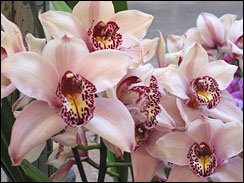
The largest orchid show in North America with over 50,000 orchids, the 26th Annual International Orchid Show was held recently in Rockefeller Center. Exhibited in 25 major categories , some of the orchid growers have patiently waited and trained for 6 years to display their prize specimens.
Monday, April 24, 2006
Orchids: Winners and Losers in Global Warming
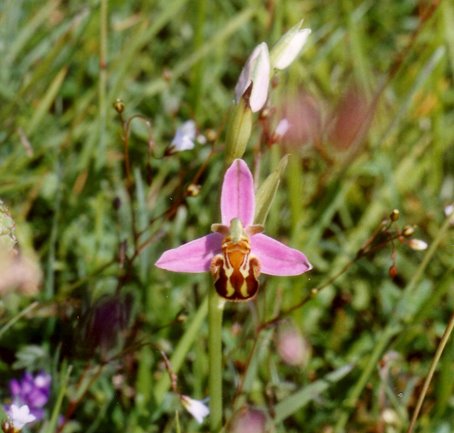

The benefits of global warming have increased the numbers and frequency of occurrence of British wild orchids in the last twenty years. A study by the Botanical Society of the British Isles (BSBI) has found that the bee orchid and the pyramidal orchid have virtually doubled in frequency since 1987. The study also found that one rare orchid, the lesser butterfly orchid has declined over 50 percent, although there is no proof that the cause is global warming.
Sunday, April 23, 2006
Indonesia's Pristine Forests In Danger
The last of Indonesia's pristine forests, in the remote province of Papua, are under threat and all commercial logging there should be halted, environment watchdog groups said.
"A handful of logging companies have wiped out much of Indonesia's forests. They must be stopped from finishing off our last intact forests in Papua," Emmy Hafild, from international environment group Greenpeace, told a press conference here.
She said that the government must put in place "a moratorium on large-scale commercial logging activists" in the intact forest landscapes of Indonesia, starting with Papua.
A large swathe of Papua's forests - where researchers recently discovered dozens of new plant and animal species - have already been allocated to logging companies that export timber to Japan, China, the European Union and the United States, said environmentalists.
"More than a quarter of forests in Papua have been sold off to logging companies," Christian Poerba, from Forest Watch Indonesia told the same press conference, pointing out that the logging concessions were for periods of between 20-30 years.
Scientists from Conservation International last December found a virtual "lost world" home to dozens of new species, including frogs, butterflies, and an orange-faced honeyeater bird in Papua's remote Foja mountains.
Greenpeace feared that "large-scale commercial logging is about to cut through the rainforest 'Eden' in Papua," the group said in a statement issued at the press conference. Indonesia has already lost 72 percent of its intact forests, and deforestation rates in the archipelago are among the highest in the world, Greenpeace says.
Greenpeace said the world's forests were in "critical condition" with less than ten percent of the earth's land area covered in intact forests.
Saturday, April 22, 2006
This Earth Day We Need To Protect Our Trees More
It's been 36 years since the first Earth Day. Are we doing better? We've lost over a billion trees in that time. Can we do more? Don Melnick, professor of conservation biology at Columbia University, New York and Mary Pearl, president of the Wildlife Trust think so and provide reasons why we should.
Thursday, April 20, 2006
Ant Navigation Tactics Help Technology
Imagine while walking to the grocery, every few streets you have to go back home to reset your navigation system in order to avoid getting lost.
That's what ants have to do. Now and then they must visit their nest to avoid losing their way on foraging trips. Now scientists are using this understanding to make better robots. Find out what they do in this study from the Study of Experimental Biology.
That's what ants have to do. Now and then they must visit their nest to avoid losing their way on foraging trips. Now scientists are using this understanding to make better robots. Find out what they do in this study from the Study of Experimental Biology.
Sierra Club Founder, John Muir has his day
Since 1988, the United States has been honoring the founder of the Sierra Club, John Muir on April 21st. John Muir, famed naturalist, was born in Dunbar, Scotland in 1838. Find out all about John Muir , his environmental legacy for the world, including the Yellowstone National Park, and about other United States and world naturalists. There are study guides, links for government agencies and information on the Sierra Club.
Wednesday, April 19, 2006
Plains Likely To See Drought This Summer
The weather forecasters at Accuweather are predicting a drought for the Midwest plains this summer, although the state's climatologist, Mary Knapp says its a little early to compare the last four years of dry summers to the Dust Bowl drought of the 1930's. Are the farmers worried about the lack of rainfall? Seems they are more concerned about high fertilizer prices.
Bill Wood, Douglas County’s agriculture agent for K-State Research and Extension, said the lack of moisture in the soil was causing local farmers to brace themselves for the possibility of poor crop yields.“Right now, it’s looking kind of scary,” he said.
The forecast comes as a research group headquartered at Kansas University is preparing to launch a $9.25 million project aimed at predicting large-scale environmental changes such as the Dust Bowl. The grant, announced Monday, will link researchers at KU, Kansas State University and Fort Hays State University in a study of environmental changes along the Kansas River basin.“If we would have had this grant with the equipment and the computational power … before the Dust Bowl, we would have been able to predict that the Dust Bowl was coming,” said Leonard Krishtalka, director of the KU Natural History Museum and Biodiversity Research Center, the lead researcher on the project.
The three-year grant was awarded to the Kansas NSF Experimental Program to Stimulate Competitive Research. It comprises $6.75 millionfrom the National Science Foundation and $2.5 million from the Kansas Technology Enterprise Corp. Owner Steve Wilson has recently heard a few customers make reference to the Dust Bowl days. But overall, it’s not the greatest topic of concern.
“They’re probably still more concerned with high fertilizer prices,” he said.
Rain, Rain, Come again
Our yard received a half inch of rain last night with more to come tonight and tomorrow. Keeping fingers crossed since Orlando is down 6.5 inches of rain for the year. Hopefully your irrigation rain sensor will shut the irrigation system off if you received your fair share of Mother Nature's help.
Tuesday, April 18, 2006
China to use artificial rain to settle dust storm
Beijing's worst dust storm in five years will be quelled with the government spraying artificial rain. China's government has been replanting "green belts" of trees throughout the north in an effort to trap the dust after decades when the storms worsened amid heavy tree-cutting. Find out how artificial rain is made.
Jobs That Save the Earth
Everyone who teaches environmental education, water conservation, gardening, right plant, right place principles, and BMP's is saving the world one person at a time, and some teachers have a classroom full of eager youngsters at a time. Learn about other jobs that save the Earth.
Monday, April 17, 2006
Dead Sea Is Dying
Environmentalists are warning that the world's saltiest sea and lowest point on the earth - the Dead Sea - threatened by a lack of fresh water, is dying. The Jordan river, technically diverted for use in agricultural and hydrolectric projects, is fed by the Dead Sea which is bordered by Israel, Jordan and the West Bank. Read about this ecological disaster that could pose the end of the Dead Sea within the next 50 years.
US To Reposition Satellite Over Amazon
As part with of NOAA's (National Oceanic and Atmospheric Administration) contributions to improving the Global Earth Observation of Systems, will be moving a 9 year old satellite formerly used to track weather conditions, such as hurricanes, volcanic eruptions, snowstorms, and other conditions that affect agriculture and transportation will be moved over South America's Amazon region. GEOSS is a coalition of more than 60 countries working to unify Earth observation by 2015 and improve environmental policies around the planet. Find out why South America is grateful for the big move.
A Rose From Heaven
Jackson and Perkins has released the John Paul II Commemorative Rose Collection with a beautiful white, hybrid tea rose with a citrus fragrance.
The collection includes a Pope John Paul II bareroot rose and solid, cast aluminum marker to place alongside the planted rose in your garden. You'll also receive an embossed keepsake portfolio, which holds a signed and numbered certificate of authenticity, a full-color photograph of the rose and one of the
late Pontiff’s homilies. A special collector's item, this limited edition package also makes a wonderful gift.Ten percent of this rose's net sales benefit the poor of sub-Saharan Africa, one of the late Pontiff's closest concerns.
Saturday, April 15, 2006
Rain barrels can save a rainy day
April's This Old House's magazine has some great environmental articles. Check out "Harvesting The Water With Rain Barrels" so that you don't have to "Install an In-ground Irrigation System". One inch of rainfall on a 1,000 sq. ft will provide 632 gallons. If you have a 2,000 sq. ft. roof, you can collect 55,000 gallons over a year. Check out Composting on the Central Florida Yards & Neighborhoods website for more information on recycling.
Nutria found in Seattle, Washington


A water-loving rodent native to South America that has destroyed thousands of acres of wetlands in the southeast has been spotted near Lake Washington. Nutria are semi-aquatic, chocolate-colored rodents that can weigh more than 20 pounds and eat one-quarter of their weight a day in crops and plants of all varieties. Also called coypu, or swamp rats, they burrow through marshes and levies, and females can produce more than a dozen offspring a year. Read about the Invasive Species Council created to track and develop methods to remove these rodents and other exotic invasives. How did nutrias come to US?
Inaccurate blame for missing head leads to inaccurate identification
A missing head was blamed as the reason for the delay in misidentifying the migratory whooping swan in Fife, Scotland last week.
But vets at the Scottish Agricultural College say the body was intact when it was recovered from the harbour at Cellardyke. Barti Synge, the SAC's veterinary services group manager, said yesterday that he did not understand why some officials had sought to blame the delays on the absence of a head.
"My information is that it did have a head but it was difficult to identify in terms of species because it had been predated," he said. "I don't know where the suggestion came from that it did not have a head. It didn't come from us. We were just unable to identify it with any certainty. The fact that it's a whooper is a minor detail and there certainly hasn't been any cover-up."
Earlier this week Ross Finnie, the Scottish environment minister, said DNA tests on the bird had shown it was a whooper, which had probably flown to the UK from Iceland, Russia or Scandinavia.
Officials said the failure to correctly identify the bird until a week after it was first confirmed to have the H5N1 strain of bird flu had made no difference to risk assessments or to measures monitoring birds for the virus.
A spokesman said the bird had been hard to identify, and had to be tested twice.
Friday, April 14, 2006
Disappearing Saguaros and Xeriscaping in Arizona has its downside
Protecting the disappearing saguaro cacti from development in Arizona is the prickly mission of the Cactus Rescue Crew. But the Southern Arizona Home Builders Association has bought into the program, understanding that cooperation is critical on both sides.
Two years ago, concern about disappearing desert in Pima County led to the passage of a $174 million bond issue to buy open land for conservation and to a plan to cluster development in less environmentally sensitive areas.Some cities are beginning to offer homeowners and businesses financial incentives for pulling up lawn and putting in approved low-water-use plants. The city of Scottsdale, for example, recently began a successful "turf removal rebate" of 25 cents a square foot, up to a maximum of $1,500.
But xeriscaping has had unintended consequences. Nonnative African grasses introduced for drought-tolerant landscaping have begun to invade desert areas. Last year was the state's biggest fire season, fueled in part by invasive grasses, said Travis Bean, a research specialist at the University of Arizona's School of Natural Resources.
Thursday, April 13, 2006
Tony Avent, Nurseryman Extraordinaire
One of my biggest heroes is Tony Avent, owner of Plant Delights Nursery at the Juniper Level Botanic Garden in Raleigh, NC. His motto "I consider every plant hardy until I have killed it myself...at least three times" justifies my own garden philosophy that you should "grow what brings a smile to your face" and "makes your heart soar". His garden paths are definitely not your standard formal garden. The winding trails display visual beauty filled with textural interests that defy description. When you walk on the grassy paths, you constantly have to catch your breath at the unique ornamental varieties planted side by side.
Visiting his nursery during a tour last summer at the National Garden Writers Association conference, I was delighted to find Florida native plants there along with flowers that I would disappointly never find in any Florida nursery. I couldn't stop taking pictures of all the lovely flowers and ornamentals. Tony's love of naturalism takes him around the world in search of more horticultural rarities.
Last week, the NY Times article featured Tony's talents and own philosophies and thoughts of the nursery industry. A video garden tour is also available. You may have to subscribe, but it's free.
If you haven't ordered Plant Delights Nursery's catalog famous for its' front covers, check them out.
Visiting his nursery during a tour last summer at the National Garden Writers Association conference, I was delighted to find Florida native plants there along with flowers that I would disappointly never find in any Florida nursery. I couldn't stop taking pictures of all the lovely flowers and ornamentals. Tony's love of naturalism takes him around the world in search of more horticultural rarities.
Last week, the NY Times article featured Tony's talents and own philosophies and thoughts of the nursery industry. A video garden tour is also available. You may have to subscribe, but it's free.
If you haven't ordered Plant Delights Nursery's catalog famous for its' front covers, check them out.
Wildfire season will be hot this year
According to national fire weather manager Rick Ochoa, of the Bureau of Land Management:
"The entire Gulf Coast, from bone-dry South Texas to all of Florida, is at higher risk (of wildfires) in part because a La Niña weather pattern has deprived the southern one-third of the continent of its normal parade of winter and spring storms. Relief in the form of thunderstorms may not take hold until June. Vast tracts of trees blown down by Hurricanes Katrina, Rita and Wilma and vegetation killed by saltwater storm surges means more fuel for fires."
Look up - today we have the Pink Moon
The Full Pink Moon (April 13) -- This full Moon is also known as theSprouting Grass Moon, the Egg Moon, and the Fish Moon. Pink refers tothe wild ground phlox, usually in bloom around this time.Historically, Native Americans living in what is now the northern andeastern United States kept track of the seasons by giving adistinctive name to each full Moon. With some variations, the sameMoon names were used throughout the Algonquin tribes from New England to Lake Superior.
Wednesday, April 12, 2006
Justifiable Homicide in Florida

From Lucianne.com comes this great picture of what could happen if you go crazy with your lawn ornaments.

Prediction: Earth will lose 25% of species by 2050
A scientific report released today predicted that 25% of the world's plant and vertebrate animal species will be extinct by 2050.
Biodiversity hotspots are some of the richest and most threatened biological pools on Earth. They contain 44 percent of plant and 35 percent of the Earth's vertebrate species on only 1.4 percent of the Earth's land. Each hotspot contains its own set of unique species. "Climate change is rapidly becoming the most serious threats to the planet's biodiversity," said Jay Malcolm, an assistant forestry professor at the University of Toronto.In the most dramatic of the scenarios, for which carbon dioxide levels grow to double that of today's levels, the models forecasted a potential loss of 56,000 plant species and 3,700 vertebrate species in the hotspots.
Environmental educators have the world on the shoulders to get the message out to help preserve our resources by having the best management practices.
Growing a better spring
I love the latest Sears tv commercial for Craftsman lawn mowers. "Growing a better spring" shows a plant breaking through the ground in fast motion, while a snail goes by. The next scene is a spectacular display of unfocused orange crocosmias with bright green leaves in the background of a black-leafed ornamental, one of the latest gardening color trends. Red poppies slowly unfurling with tractors and then more on their lawn mowers. Keep an eye open for it - it's an inspiring garden.
Subscribe to:
Posts (Atom)