Wednesday, June 13, 2007

What Makes A Bug A Pest?

It seems it's all in the guts. Latest Japanese studies refine what is a pest and what is a bug. Depends on the micro-organism in their stomachs.

Writing in the latest issue of the Proceedings of The Royal Society B: Biological Sciences, the researchers said the finding sheds new light on the evolution of pests and may offer fresh approaches to controlling insects that harm livestock and crops.

The team worked on two very closely related species of stinkbugs in Japan - the Megacopta punctatissima, which is a pest of soybean and other crop legumes, and the Megacopta cribraria, that hardly causes any agricultural problems.

After the scientists switched the gut bacteria between the two species, the non-pest species thrived and reproduced prolifically on soybean plants in their laboratory.

The pest species, meanwhile, suffered sharply reduced egg-hatch rates and higher death rates of its nymphs, or larvae -- the very problems that the non-pest species used to face.

"We experimentally exchanged the gut bacteria between the species ... and we found the non-pest species performed very well after the transfer of the symbiont (symbiotic bacteria) and the pest species performed very poorly," Takema Fukatsu of the National Institute of Advanced Industrial Science and Technology said in a telephone interview.

"This indicates that the symbiont determined the pest status of the host stinkbug."

Fukatsu and his colleagues are now analyzing the bacteria found in the two species of stinkbugs.

"We suspect that some mutation may have occurred in their (gut) bacteria and we hope to find the difference between them. In this way, we hope to understand the molecular mechanism underlying what makes a pest and what makes a non-pest," he said.

Looking ahead, Fukatsu hopes their research will have practical applications.

"This molecular mechanism can be used for pest control," he said.

Turning Water Into Fire

What if running your car, bus, tractor, train, plane, was as easy as filling it with water? It's in the works if one Florida man figures out what he did.

A Florida man may have accidentally invented a machine that could help solve the gasoline and energy crisis plaguing the U.S., television station WPBF reported.

Sanibel Island resident John Kanzius is a former broadcast executive from Pennsylvania who wondered if his background in physics and radio could come in handy in treating the disease from which he suffers: cancer.

Kanzius, 63, invented a machine that emits radio waves in an attempt to kill cancerous cells while leaving normal cells intact. While testing his machine, he noticed that his invention had other unexpected abilities.

Read what Mr. Kanzius has discovered.

Tuesday, June 12, 2007

Most of China's Water Polluted

Reuters is reporting that two-thirds of China's water supply is polluted.

Only 37.6 percent of 585 cities surveyed had air quality "indicating a clean and healthy environment," down 7.3 percentage points from 2005, the China Daily said, citing a report by the State Environmental Protection Agency (SEPA).

Thirty-nine cities, many scattered across the northern coal-rich province of Shanxi and China's northeastern rustbelt province of Liaoning, suffered "severe" air pollution, the paper said.

"The report also found that the ratio of quality water in the major urban areas, either for drinking or industrial use, had dropped by 7.24 percent," the paper said.
Two hundred cities had no "centralized sewage management system" and 187 had no garbage disposal plants, it said.

The government planned to have at least 70 percent of sewage and at least 60 percent of garbage treated effectively by 2010, but "the environment issue remains of serious concern and there is difficulty realizing the goal," the paper quoted the report as saying.

The report comes as the capital Beijing on Tuesday was shrouded in thick smog, which local media said was exacerbated by smoke blown into the city from crop burning in neighboring provinces.

On Monday night, an index measuring air pollution from Beijing's southern Daxing county read over 850 particles of "particulate matter" per square meter, which was eight times the norm, the Beijing News said.

Sunday, June 10, 2007

North America Facing Worst Drought In History

A British newspaper, The Independent, reporting that America is facing it's worst drought in history, worse than the Dust Bowl years during the late 1920's.

From the mountains and desert of the West, now into an eighth consecutive dry year, to the wheat farms of Alabama, where crops are failing because of rainfall levels 12 inches lower than usual, to the vast soupy expanse of Lake Okeechobee in southern Florida, which has become so dry it actually caught fire a couple of weeks ago, a continent is crying out for water.

In the south-east, usually a lush, humid region, it is the driest few months since records began in 1895. California and Nevada, where burgeoning population centres co-exist with an often harsh, barren landscape, have seen less rain over the past year than at any time since 1924. The Sierra Nevada range, which straddles the two states, received only 27 per cent of its usual snowfall in winter, with immediate knock-on effects on water supplies for the populations of Las Vegas and Los Angeles.

The human impact, for the moment, has been limited, certainly nothing compared to the great westward migration of Okies in the 1930 - the desperate march described by John Steinbeck in The Grapes of Wrath.

Big farmers are now well protected by government subsidies and emergency funds, and small farmers, some of whom are indeed struggling, have been slowly moving off the land for decades anyway. The most common inconvenience, for the moment, are restrictions on hosepipes and garden sprinklers in eastern cities.

But the long-term implications are escaping nobody.

Meanwhile, China is flooding - Millions suffering.

Saturday, June 09, 2007

Climate change raises threat of water wars


Mikhail Gorbachev on water wars and the need for water conservation. I wondered where he went. He's now the chairman of the Board of the Green Cross International.

The Intergovernmental Panel on Climate Change recently released alarming data on the consequences of global warming in some of the world's poorest regions. By 2100, 1 billion to 3 billion people worldwide are expected to suffer from water scarcity. Global warming will increase evaporation and severely reduce rainfalls — by up to 20 percent in the Middle East and North Africa — with the amount of water available per person possibly halved by midcentury in these regions.

This sudden scarcity of an element whose symbolic and spiritual importance matches its centrality to human life will cause stress and exacerbate conflicts worldwide. Africa, the Middle East, and Central Asia will be the first to be exposed. The repercussions, however, will be global.

Read the whole article co-written with Jean-Michel Severino, the CEO of the French Development Agency

Friday, June 08, 2007

New Species Found In Suriname

Just when we think we have recorded all of Earth's creatures... we find more! In Suriname, 24 new species have been discovered everything from a two-toned frog, panthers, pumas, monkeys, reptiles, and insects.

Read up on these beautiful new treasures.

Wireless Goes To The Next Level

Have you ever been frustrated with all those extension cords?

In a decade we may not have to plug any electrical appliances or technology!

No batteries to dispose of, no plugs, no extension cords to trip over, just an electrical beam! How green is that?

Beam my house, Scottie!

Thursday, June 07, 2007

Plastic Water Bottles Safe

The latest urban legend hitting your email boxes. Plastic water bottles are safe and do not contribute to cancer in women.

Bottled Water Better Than Tap?

World Health Organization: Bottled Water Safety

Keep Food and Water Safe In Emergencies

You're Tired? Head To Fort Lauderdale Beach

Jeffrey Kofman, ABC correspondent heads to the beach and lets you in on a dirty secret. Lying on the bottom of the ocean are reefs that are just junk.

It’s a good thing sun lovers on the beach in Ft. Lauderdale can’t see below the surface. Because if they could the ocean view that lured them here might not be so seductive. Just seventy feet below the surface and a mile off shore, sits a man-made environmental disaster. An estimated two million tires littering the ocean floor.

It is one of those “it seemed like a good idea at the time” stories. More than thirty years ago someone came up with the idea of solving two problems at once: get rid of a lot of used tires and create a new reef for fish, coral and tourists.

It didn’t work.

Back in 1972 -- with government approval -- flotillas of boats headed off shore to heave tires into the ocean.

But hurricanes, waves and water currents jostled the tire piles. Fish and coral never took to them… instead this junk pile that was intended to create an artificial reef is destroying a natural reef.

There are similar dumps off the coasts of Texas and Virginia. And in North Carolina, where hundreds of tires from another deep sea dump were washed ashore in 1998 during Hurricane Bonnie.

This week the U.S. Navy began the massive cleanup job, using the underwater tire field to train novice divers in salvage and recovery. It will cost several million dollars and take several years to restore the ocean floor to the way it was before it became a dumping ground.

Matthew Hoelscher has the ugly pictures.

LA Residents Told To Cut Showers

Los Angeles residents have been asked to cut their showers to help conserve water during the drought.

Los Angeles residents were urged on Wednesday to take shorter showers, reduce lawn sprinklers and stop throwing trash in toilets in a bid to cut water usage by 10 percent in the driest year on record.

With downtown Los Angeles seeing a record low of 4 inches of rain since July 2006 -- less than a quarter of normal -- and with a hot, dry summer ahead, Mayor Antonio Villaraigosa said the city needed "to change course and conserve water to steer clear of this perfect storm."

It is the driest year since rainfall records began 130 years ago.

The Eastern Sierra mountains, where Los Angeles gets about half of its water supply, marked its second-lowest snowpack on record this year. That and the lack of rainfall could force the nation's second largest city into full drought mode in coming months, officials said.

Below average rainfall for the past few years has also turned the traditional summer southern California fire season into an all-round event. Firefighters battled two major brush fires in May alone, at the Los Angeles landmark Griffith Park and on the tourist island of Catalina.

Wednesday, June 06, 2007

Green Appliances Cut Emissions 40%

Environmental appliances are better for cutting household emissions by 40%.
Switching to energy-saving electrical appliances can reduce household emissions of greenhouse gases by up to 40 percent, according to the 2007 white paper on the environment, which was released Tuesday.
More information on green appliances.


Surge Or Not To Surge?

Still more controversial studies on global warming increasing hurricanes.
A surge in major Atlantic hurricanes over the last decade -- often cited as evidence of increasing global warming -- may not be a surge at all but a return to normal storm patterns, according to a new study.

Using nearly three centuries of hurricane history recorded in organic storm debris encased in coral reefs, researchers found that the frequency of major hurricanes today was about the same as it was during extended periods from the mid-1700s to the mid-1900s.

"There were periods that were just as active as we see now," said study coauthor Terrence Quinn, a paleoclimatologist at the University of Texas at Austin.

At the same time, the researchers found that the number of major hurricanes from the late 1960s to the early 1990s -- a period that our present cycle is often compared to -- was unusually quiet for storms.

Central Winds Park Nominated Field Of Excellence

Seminole County has a lot of great parks and recreation areas to be proud of, but one park, Central Wind Park stands out from the rest.
In central Florida, nestled away in the City of Winter Springs, there is a jewel of a community park waiting to be discovered. Residents of Winter Springs are already familiar with it, since it is a centerpiece of the town. It is the Central Winds Park – “The Fields of Excellence” and it may be one of the most incredible finds in all of the Orlando area. Central Winds Park is a 103-acre complex situated about 20 minutes north of downtown Orlando. It contains two baseball fields, two softball fields, four soccer fields (all Tifway 419 Bermuda grass) and the parks and recreation offices.
Read all of Parks Superintendent Alan Greene's article on Winter Springs incredible efforts. Better yet, take a day and visit the Central Wind Park complex. It will make for a great day in the park.

Look At Those Melons!

Amazing how fruit doesn't last long in my fridge or on the counter but will last more than 2,000 years under the ground near Tokyo.

Archaeologists have excavated in Shiga Prefecture what they believe are the oldest remains of a melon ever found.

Based on a radiocarbon analysis, researchers estimate the half-rounded piece of fruit to be about 2,100 years old, Shuji Yamazaki, an official in the city of Moriyama, said.

The remains are believed to be the oldest of a melon that still has flesh on the rind, Yamazaki said. Previously, the oldest such find was believed to be remains found in China that date back to the fourth century A.D.

The melon might have been so well-preserved because it was in a vacuum-packed state in a wet layer below the ground, an environment hostile to microorganisms that might otherwise have broken down the remains, Yamazaki said.

Saturday, April 28, 2007

How To Tell If Your Boat Is Too Small

Summertime will soon be here, kayakers will be out in full force. As a matter of fact, I was just kayaking on the Ecofina River in March, but I didn't have to worry about sharks. This photo is real.

Ancient Rainforest Found In Coal Mine

What comes to mind when you hear the word rainforest?

Do you picture South America, Africa, Australia, Asia, the Amazon, lots of humidity, wetlands, ferns, tropical plants, tropical wildlife species, and huge trees?

But would the location of Danville, Illinois come to mind?

It's amazing to me how much the earth has changed over the last few million years. Now more fern fossils found confirm that Illinois used to be the site of an ancient rainforest. Check out Live Science's article.

Monday, April 23, 2007

More Studies On Parkinson Disease & Pesticides

More significance being shown from research on pesticide use and developing Parkinson's disease.

Wednesday, April 18, 2007

Patch Perfect Isn't

Have you seen the latest commercial about the new grass seed that grows on cement blocks, driveways, anywhere? I was horrified to think how many people are going to purchase this product without really looking into it. Is it a scam?

Watching the video on their site, they show grass that grows on cement. How deep will that lawn's root system be? In summertime, it will need watering every day to survive. Well, let's just say that the grass on tv isn't always greener in your own yard once you buy it.

The grass concoction is a slurry of easily-germinated, northern rye and fescue seeds combined that has fertilizer mixed in and retains moisture to allow it to grow quickly. I repeat: northern grass seeds. It won't survive our Florida humidity and heat.

Now there is a method of hydroseeding that is effective for stopping erosion and can be effective with grass seeds.

If you don't have a green thumb, before buying any shrub, perennial or grass plugs online, check with your local county Extension office or Master Gardener Clinic. They will give you the unbiased facts about any horticultural sales pitch or plant that you read or hear about.

The other grass product that makes me laugh is the advertisement for "miracle grass" you find in the local Sunday comic section. There's a reason it's been placed in the cartoon section rather than the Home and Garden section.

Purchasing plant material locally and only from recognized online and catalog sources is the smartest move. You'll keep more of your green stuff in your wallet that way.

Getting Hands Dirty Is Good For The Soul

I've known for years that digging in the dirt, gardening with vigor is good for your soul. It does a body good.

Well, now science is backing that up. The latest research out of the United Kingdom suggests that a type of good bacteria found in dirt may affect the brain in a similar way as antidepressants.

Researchers from Bristol University and University College London discovered using laboratory mice, that a "friendly" bacteria commonly found in soil activated brain cells to produce the brain chemical serotonin and altered the mice's behaviour in a similar way to antidepressants.

They are suggesting this could explain why immune system imbalance could make some people vulnerable to mood disorders like depression.

Lead author, Dr Chris Lowry from Bristol University said, "These studies help us understand how the body communicates with the brain and why a healthy immune system is important for maintaining mental health".

"They also leave us wondering if we shouldn't all be spending more time playing in the dirt," he added.

Dr Lowry and colleagues became interested in the project when they heard that cancer patients treated with the bacterium Mycobacterium vaccae reported increases in their quality of life. They speculated this could be because the bacteria were activating brain cells to release more serotonin.

Check out "Gardening With Soul" and find out why gardening is good for you. I promise you will feel better afterwards.

Sunday, April 15, 2007

Taking A Bite Out Of Stupidity

So maybe the Taiwanese vet "de Milo" didn't have a handle on the situation...

A zookeeper in Taiwan has undergone seven hours of surgery to have his arm reattached after it was bitten off by a crocodile, while another zoo worker in Argentina was today fighting for her life following a freak attack by an anteater.

In Taiwan, doctors today announced they had completed the intensive surgery to reattach Chang Po-yu's forearm after a 440-pound Nile crocodile bit it clean off.

The country's Liberty Times newspaper reported that the country's accident happened at the Shaoshan Zoo in the southern city of Kaohsiung, when the veterinarian tried to retrieve a tranquiliser dart from the reptile’s hide so he could give it medication.

Okay, this just needs to be said: "Sometimes it doesn't pay to go out on a limb to help animals."

Goats, Cats, And Dogs Oh My!

The Galapagos Islands are an Darwinist's Paradise, but it's quickly descending into evolutionary hell with tourism and exotic species.

Tourism, overpopulation and non-native species are threatening the ecosystem of the Galapagos Islands, the archipelago which inspired British naturalist Charles Darwin's theory of evolution, experts say.

The islands, which attract hordes of tourists each year for their unique array of flora and fauna unseen elsewhere in the world, are "at risk" due to a heavily imperiled ecosystem, Ecuadorean President Rafael Correa has declared.

In order to protect the UNESCO World Heritage site, Correa this week issued orders to restrict tourist traffic, overhead flights and residence permits on the isles 1,000 kilometers (621 miles) from Ecuador's coast.

The situation is so grave that a UNESCO delegation has been dispatched to determine if the archipelago should be officially listed as one of the major world heritage sites that are "in danger."

"We have not yet drawn our conclusions but it should not be any secret to anyone that we are concerned about the islands," said World Conservation Union program director Robert Hofstede. The mission's findings will be examined from June 23 to July 2 by an intergovernmental committee on world heritage sites in New Zealand.

The situation has worsened in the past 15 years due to the introduction of insects that are harmful to plants and other animal species that are disrupting the native balance, according to the Charles Darwin Foundation research group.

Most of the harmful changes have accompanied a three-fold increase in tourism to the island over the past 15 years as well as a similar rise in immigration, said foundation chief Graham Watkins.

"Studies show that 60 percent of the 1,880 local plants are threatened. We have discovered 490 insect species that have been introduced as well as 53 new invertebrate species, 55 of which are particularly invasive," Watkins said.

A major factor in the ecosystem's decline has been the introduction of dogs, cats, goats and donkeys -- species that were not on the island before.

"Part of the reason we are at this point is because man has introduced these species which have become the Galapagos's main predators," biologist and co-director of the Galapagos Park Carlos Valle told AFP.

Over the past three years, UN workers teamed up with the park to eliminate as many as 80,000 wild goats. These animals' eating habits were threatening the food supply of the turtles who came centuries before.

Taking The Corn Out Of Ethanol

It always seems to happen that when a good idea pops up to assuage a global issue, it creates problems in other areas. Our economy, for instance. An industrial biotechnology conference in Orlando last month came up with some ideas to help ease the transition from oil to ethanol.

The ethanol craze is putting the squeeze on corn supplies and causing food prices to rise.

Mexicans took to the streets last year to protest increased tortilla prices. The cost of chicken and beef in the United States ticked up because feed is more expensive.

That's where biotechnology comes in.

[...] Researchers are racing against time. Already, 114 U.S. ethanol biorefineries are in operation and 80 more are under construction. Producers made nearly 5 billion gallons of ethanol last year, a 25 percent increase from the previous year.

And nearly all of it was made from edible corn kernels.

That's good news for U.S. farmers, but consumers are suffering at the checkout stand because corn prices have nearly doubled over the last two years and will continue to climb.

And with farmers planting corn at unprecedented rates, often instead of other crops, prices for other products may soon rise as well.

Corn is a fundamental U.S. food ingredient, found in everything from soft drinks to cough syrup. It's also a staple throughout Latin America, where residents may feel the sting of rising corn prices the most.

Backers of alternative production methods argue that a technological change is needed soon, before corn-based ethanol grows so large that other manufacturing methods will be squeezed out of the market.

That's why genetic engineers from Berkeley to Florida are racing to produce ethanol without corn. They're looking into termite guts, the human urinary tract and sap from palm trees for exotic microbes that can produce alternative fuel sources.

Silicon Valley billionaire Vinod Khosla, the Sun Microsystems Inc. co- founder, is among the venture capitalists gambling on cellulosic ethanol. His venture capital firm has invested millions in biotech companies pursuing alternative fuel strategies.

"In a short period of time we can replace 100 percent of our gasoline use," Khosla told executives and scientists gathered last month at an industrial biotechnology conference in Orlando, Fla.

Read the entire article here.

Yo Te Quiero Taco Cacti?

Well the picture used with the article showed a spiny, prickly barrel cactus with cholla cactus in the background, so I'm confused.

But maybe it was the reporter or editor who didn't know what cactus is exactly. Or maybe the cook has to pluck the cactus first before cooking?

An Israeli farm plans to serve up a cactus surprise -- an edible and spineless plant with healing properties that can treat hypertension and diabetes, according to local reports.

The prickless preparation has been imported from Mexico, where more than 20 varieties of cactus are cultivated for
their medicinal properties, the daily Maariv said.

"In Mexico, this cactus is considered to be a delicacy," said Rahamim Shaar, director of the Emek Hefer farm north of Tel Aviv. "It can be cooked like a steak in a frying pan, or baked
in the oven wrapped in aluminium foil."

Planting Trees In Cooler Climates Could Be Hot Issue


National Academy of Sciences has published a study that makes note that planting trees in colder hemispheres could acerbate global warming. Researchers from Stanford University and Universite Montpellier II in France partnered with the Academy.

"Our study shows that only tropical rainforests are strongly beneficial in helping slow down global warming," Govindasamy Bala, an atmospheric scientist who led the research, said.

"It is a win-win situation in the tropics because trees in the tropics, in addition to absorbing carbon dioxide, promote convective clouds that help to cool the planet.

"In other locations, the warming from the albedo effect [sunlight absorption] either cancels or exceeds the net cooling from the other two effects."

[...] "When it comes to rehabilitating forests to fight global warming, carbon dioxide might be only half of the story; we also have to account for whether they help to reflect sunlight by producing clouds, or help to absorb it by shading snowy tundra," study co-author Ken Caldeira said.

However, the authors did not endorse deforestation of the boreal forests as a measure against global warming.

"Preservation of ecosystems is a primary goal of preventing global warming, and the destruction of ecosystems to prevent global warming would be a counterproductive and perverse strategy," Mr Caldeira said.

Makes sense to me. Allowing sunlight to filter through in the wintertime is why Mother Nature provides deciduous trees.

Do you want to sing a song while planting trees? Try this one.

Killer Trees?

Saturday, April 14, 2007

Cell Phones Cause Of Bee Disappearance?

More discoveries of bee colony collapse in Europe and United Kingdom with speculation pointing a finger at telephone radiation.
Nigel Hurst, the editor of the Scottish Beekeeper magazine, said: "One or two people here have lost colonies. More and more, we are hearing about unexplained losses. "A good one-third of the food we eat is affected in some way by the bee population. The quote that's normally given is from Einstein, who said, 'If all the honey bees were wiped out, mankind would follow in about four years'."
Beekeepers across the UK have found hives deserted by bee colonies, even though there is no obvious reason, such as disease.
Mr Hurst said: "There's all kinds of guesswork going on - a lot of money is being spent in America to try and find out exactly what the problem is."
Janice Furness, the secretary of the Fife branch of the Scottish Beekeepers' Association, said: "We have had some cases - we've been calling it the Mary Celeste syndrome. A hive seems fine, then the next week it is empty and there are no more dead bees inside than you would normally expect. They have left behind developing broods and eggs. It is totally against all their instincts to do that."
Ms Furness said bees sometimes left their hives in the autumn and moved elsewhere, but that mass abandonments early in the year were extremely unusual.
She added: "If they do something like this in February, there's no chance of setting up a new colony - it's mass suicide." She said one beekeeper in her area had lost 12 out of 15 hives for no apparent reason.
Ms Furness added: "One of my beekeeping friends is convinced it has something to do with telephone masts. Bees are very sensitive to radiation from these things."
Ms Furness added that the government needed to put more money into research.
She said: "I don't think that they realise how important bees are. About 80 per cent of pollination is through honey bees. If anything affects that, it could be very serious."
In Spain, thousands of colonies are said to have been lost, and up to 40 per cent of Swiss bees are reported to have disappeared or died. Heavy losses have also been confirmed in Portugal, Italy and Greece.

Read Colony Collapse Disorder Solved?

Read Hernando County's Florida Native Plant Society member Sharon's wonderful article on Little Known Pollinators.
 
Read about Colony Collapse Disorder

Plight of the Bumblebee

Mobile Phones Wiping Out Bees?

Wednesday, April 11, 2007

One Thing Leads To Another


Click on cartoon to enlarge.

Colony Collapse Disorder

Apiarians are starting to ask for government intervention on the rapidly disappearing bee populations in the United States.

US beekeepers have been stung in recent months by the mysterious disappearance of millions of bees threatening honey supplies as well as crops which depend on the insects for pollination.

Bee numbers on parts of the east coast and in Texas have fallen by more than 70 percent, while California has seen colonies drop by 30 to 60 percent.

According to estimates from the US Department of Agriculture, bees are vanishing across a total of 22 states, and for the time being no one really knows why.


"Approximately 40 percent of my 2,000 colonies are currently dead and this is the greatest winter colony mortality I have ever experienced in my 30 years of beekeeping," apiarist Gene Brandi, from the California State Beekeepers Association, told Congress recently.

It is normal for hives to see populations fall by some 20 percent during the winter, but the sharp loss of bees is causing concern, especially as domestic US bee colonies have been steadily decreasing since 1980.

There are some 2.4 million professional hives in the country, according to the Agriculture Department, 25 percent fewer than at the start of the 1980s.

And the number of beekeepers has halved.

Read all the theories buzzing around as to what the experts believe is causing the CCD - Colony Collapse Disorder.

Hyponasty - Dirty Word Of The Day

Great word to allude to in gardening conversations. Wait till you see the stares as you say "Have you seen my hyponastic grapefruit tree lately?"

An odd property of leaves is that the cells on one side often grow faster than the cells on the other, creating the demand for today’s word. The adjective is "hyponastic" and the adverb, "hyponastically." The antonym is epinasty "greater growth on top than on the bottom." This usually causes a downward curve in a leaf.

Etymology: Greek hypo "below, under" + nastos "pressed close" (from nassein "to press"). Greek "hypo" strangely shares an origin with English "up." The original root had a variant with an initial [s] that resulted in Latin sub "under". This root is also related to its antonym, Greek "hyper" (Latin "super"), extended by the common Indo-European suffix -er. Words often share an origin with their antonym, "cold" and "scald," are an example.

A very common slip of the tongue is an antonym substitution, e.g. "I was very cold . . . I mean, hot." Antonyms may be logically antithetical but lexically they form a close relationship.

Just make sure you don't use when referring to someone's rose hips. Like I always say... from the waist up!

Earth Shattering Gardening Back

I've been so busy that my environmental/gardening blog has had to take a back seat. Well, I'm back with much more enthusiasm, I'll post crazy veggie tales, gardening tidbits, environmental stories, earth-shattering news, and helpful advice as the seasons change. Keep me busy - send me anything you think others should know, comments, what you want to see, news items, funny items, we'll take a look and see if it's fertile enough to grow right here.

Wednesday, May 17, 2006

Alligators Are Nothing To Tangle With

Okay, Floridians know how dangerous alligators are and the tragic deaths are not to be taken lightly. But the Onion does have a point about alligators and John Deere tractors.

El Salvador Isn't Waking Up And Smelling The Coffee

Estimations of 13 percent of El Salvador's so-called coffee forests were lost in the 1990s.

Tropical forests that house El Salvador's famed coffee plantations and provide habitat for migrating birds are being depleted at an alarming rate, scientists warned on Tuesday.

Between 2001 and 2004, the country lost 21,025 hectares of forest-covered coffee farms, Mario Acosta, president of El Salvador's Foundation for Coffee Research (Procafe), said. El Salvador last year planted around 161,000 hectares of coffee, the vast majority of it grown on wooded plantations.

With the greatest population density and smallest land size in Central America, El Salvador was long ago cleared of virtually all its native forest. Coffee farms, where bourbon variety coffee trees flourish under a thick shade canopy, provide 75 percent of El Salvador's remaining forest cover.
"Just in the period between 2001 and 2004, we lost 21,025 hectares with the accompanying environmental degradation, with the problems this means for watersheds and all the problems of unemployment in the countryside," Acosta told reporters at the opening of a regional conference on the role of the coffee industry in the environment.
El Salvador: Coffee, US Library of Congress
Coffee Could Save El Salvador's Wildlife
United States Agency For International Development: El Salvador

China's Water Pollution Increasing

China reports south coast water pollution serious.

China has admitted that measures to tackle "serious" water pollution in the southern booming province of Guangdong are not working, state media reported on Wednesday.

Water quality in both coastal waters and inland estuaries remained poor, the China Daily said, citing Chinese experts.
The drainage of land pollutants to the sea was a key reason for the poor sea quality and poor ecological environment, the China Daily quoted Zhong Jianqiang, an environmental researcher, as saying

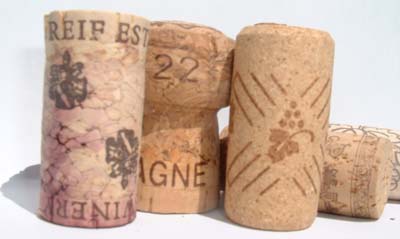
Cork Screwed?


Telling someone to put a 'stopper in it' won't have the same effect with plastic twist off caps.

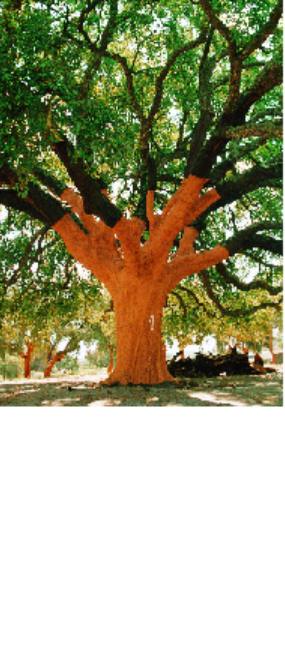
Up to three quarters of the unique cork oak forests of the Mediterranean could be lost within 10 years because of the increasing popularity of the screw-top wine bottle.

The move away from traditional stoppers made of cork threatens the survival of one of Europe's most important wildlife habitats, according to a study by the conservation group WWF.
If the trend for plastic stoppers and screw tops continues, then just 5 per cent of wine bottles sold in Britain in 2015 could be using corks, the report says.

If the Mediterranean cork oak forests are jeopardized, experts estimate that it could result in the loss of 62,500 jobs as well as a habitat loved by the endangered Iberian lynx, the Barbary deer, the black vulture and the imperial Iberian eagle.

Portuguese oak forests
World's Largest Cork Tree?
Cork Masters

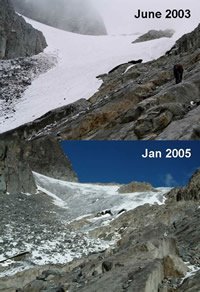
African Glaciers To Disappear Within 20 Years?


A recent survey shows that the ice field straddling the border between Uganda and the Democratic Republic of Congo now covers less than a single square kilometre. A century ago, it was roughly seven times this size.The Elena glacier is retreating by between 10 and 15 metres each year, says Richard Taylor of University College London, who led the survey. The two images show the extent of the retreat over just 30 months.

Read the full article at Nature.

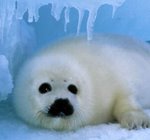
Harps On The Beaches Becoming Common Sight


An increasing number of young harp seals are straying from their northern breeding grounds and showing up on U.S. beaches, biologists say. Federal researchers say 297 harp seals were reported on beaches from Virginia to Maine last year, almost double the 152 reported in 1995.

The booming arctic harp seal population in Canada, spurred by a hunting ban, and dwindling food sources such as cod are among the reasons being cited.